James Fadiman
How to Change Your MindJames Fadiman was a psychologist whose career in psychedelic research joined laboratory-era ambition to a later, more dispersed culture of guided psychedelic practice. At the International Foundation for Advanced Study, he helped investigate whether LSD could enhance creativity and problem solving; decades later, a meeting he called for at a science conference drew a hundred underground guides. His trajectory makes him a witness to both the promise claimed for psychedelic research and the unsettled boundary between formal study and work outside institutions.
Identity and Research Setting
Fadiman had graduated from Harvard University in 1960 and was a first-year graduate student when Myron Stolaroff hired him as staff psychologist at the International Foundation for Advanced Study. The foundation, established by Stolaroff and Willis Harman in 1961, aimed to explore whether LSD could enhance human personality and creativity. It had a research permit from the FDA and supplies of LSD and Mescaline obtained through Al Hubbard. Alongside Fadiman, the staff included psychiatrist Charles Savage, who served as medical director, and Don Allen, who had left his engineering position at Ampex to become a screener and guide.
The foundation’s work was not confined to experiments on professional achievement. Its clients were generally healthy people, including what Fadiman described as a healthy neurotic outpatient population. A five-hundred-dollar package included personality tests before and after a guided LSD session, as well as follow-up. Across six years, the foundation processed about 350 people. Its published reports recorded participants’ assessments of changes in love, self-esteem, and experiences of a higher power or ultimate reality. Those who reported such an experience also reported the most lasting benefits; Don Allen described changes in beliefs, attitudes, and behavior, while the reports also acknowledged that some clients ended marriages after concluding they were trapped in destructive patterns. This context matters to Fadiman’s research: the foundation treated the psychedelic session not as an isolated dose but as part of a larger program of preparation, guidance, testing, and follow-up.
Creativity Experiments
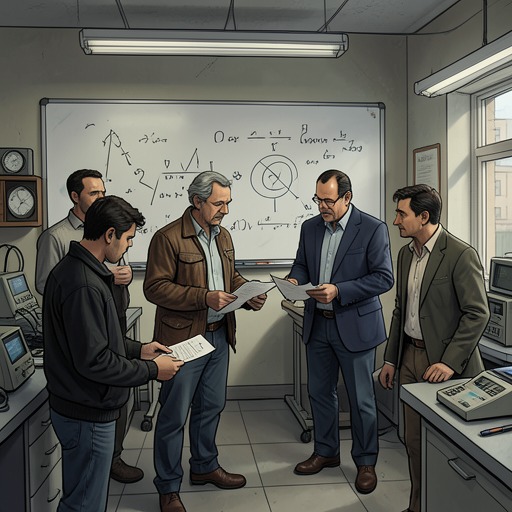
Fadiman and his colleagues also asked whether LSD could help people make progress on specific problems. The difficulty was built into the question: an experience powerful enough to alter perception might also distract participants from the task they meant to solve. The researchers first tested their own capacity to design a credible experiment while on a relatively light, hundred-microgram dose. They concluded that they could carry out the work, then extended the test to artists, engineers, architects, and scientists who felt stuck on a particular project.
Working in groups of four, Fadiman and Willis Harman administered the same dose to participants and deliberately shaped the set and setting. The researchers told them to expect unusual intellectual capacities and unprecedented problem-solving ability. Participants subsequently reported more fluid thought, greater ability to visualize a problem, and an increased capacity to place it in a new context. Fadiman later recalled the researchers’ surprise at how many solutions participants considered both novel and effective. Among the people involved were figures who would soon help transform computing, including Douglas Engelbart.
The experiment’s claims were accompanied by clear methodological limitations. It was not controlled, relied on participants’ own evaluations of their success, and ended before the study could be completed. Its results therefore could not establish that LSD had objectively improved problem solving. Even so, the work identified a research question that the researchers considered worth pursuing: whether a guided psychedelic session might loosen habitual approaches to a problem without causing the participant to lose sight of it.
The Interrupted Program
The abrupt end of the foundation’s research gave Fadiman’s recollection of the creativity study an unusually concrete final scene. In October, the FDA sent letters ordering psychedelic researchers across the country to stop their work. The notice revoking approval for the International Foundation for Advanced Study arrived just as Fadiman had finished dosing four participants for a problem-solving session. As he read it in the next room, the four men were already lying down, their session under way. Fadiman proposed that the staff agree they had received the letter the next day; they postponed acting on it until then, when the foundation’s program closed along with virtually every other psychedelic research program then operating in the United States.
The episode puts institutional prohibition beside the immediate circumstances of an experiment: a regulatory letter in one room, four dosed participants in another. Fadiman’s account records the delay without turning it into evidence that the study was complete or that its findings had been verified. The program stopped before it could finish, leaving its proposed avenue of research open but unresolved.
The 2010 Gathering
In 2010, Fadiman attended a psychedelic science conference organized by the Multidisciplinary Association for Psychedelic Studies in San Jose. More than a thousand people gathered at a Holiday Inn, among them several dozen scientists presenting formal research, guides from university trials and underground practice, and psychonauts who used psychedelics for spiritual, therapeutic, or recreational purposes. The conference made visible a broad field whose less formal practitioners had remained difficult to count or describe.
Fadiman came to speak on the scientific program about the value of the guided entheogenic journey. Wondering how many underground guides were present, he announced a meeting for guides at eight the following morning. He expected perhaps five people. Instead, a hundred arrived. The gap between his expectation and the turnout was a revelation not about a single organized body, but about the extent of an informal practice that had not been readily visible to researchers.
After the meeting, a collaborative online wiki appeared where guides could share documents and develop material together. Fadiman included its address in his 2011 book, The Psychedelic Explorer’s Guide. The site’s existence suggested common practices and professional aspirations among people who did not constitute a formal organization; some of its sub-wikis had gone without updates for years, and it was possible that public disclosure had prompted their creators to move elsewhere or abandon them.
A Bridge Between Research Cultures
Fadiman’s significance in these episodes lies partly in the contrast between his settings. In the 1960s, he worked within a permitted research foundation, testing LSD with defined doses, guided sessions, personality measures, and problem-solving tasks. When federal approval was withdrawn, that institutional program ended before its creativity experiment was complete. In 2010, he spoke from the scientific track at a conference where university researchers, underground guides, and individual psychedelic users occupied the same gathering, then helped make a previously scattered population visible by calling it together.
The account does not present the two worlds as identical or the underground gathering as a continuation of the foundation. Rather, Fadiman’s own presence connects them: the psychologist who had tested a guided session’s possible effects on difficult work later addressed the value of guided journeys and discovered how many practitioners were already working beyond the reach of formal research. His career in the evidence here is defined by that crossing, and by the limits that accompany it: promising self-reported results, an unfinished study, and an informal field whose scale became apparent only when a hundred people answered a morning invitation.